
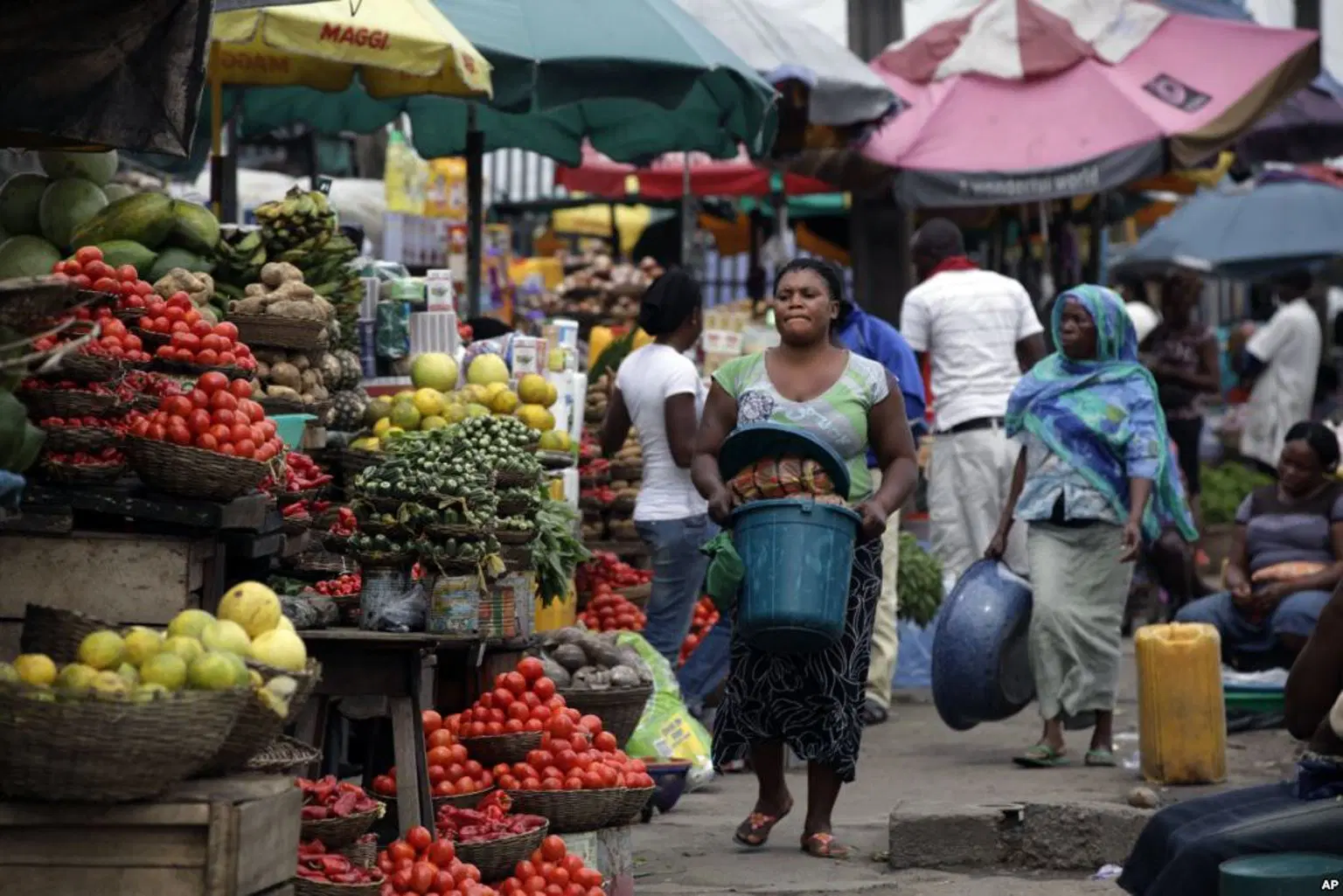
One year after Nigeria’s inflation crisis hit its peak, the headline numbers suggest relief.
Official data shows food inflation slowed sharply from 39.84 per cent in December 2024 to 10.84 per cent in December 2025, a dramatic deceleration that, on paper, should have eased pressure on household budgets.
But for many Nigerian families, especially low-income households that spend the largest share of their income on food, the more urgent question is simpler:
Can they now buy more than they could a year ago?
The answer, increasingly, appears to be not yet.
The World Bank’s latest assessment suggests the inflation slowdown has not translated into immediate welfare gains. Poverty rose further in 2025, reaching 63 per cent, even as food prices began rising more slowly.
That paradox points to an important economic reality: slower inflation does not mean cheaper food.
It simply means prices are rising less quickly than before.
For households already hit by the severe food-price shock of 2024, that distinction is critical. By the time inflation began moderating, staple prices had already climbed to levels that permanently altered consumption patterns for many families.
A bag of rice that doubled in price during the inflation surge does not become affordable simply because its price now rises more slowly.
Instead, the burden shifts to wages, farm incomes and informal earnings, many of which have failed to keep pace.
The World Bank captured the challenge bluntly, noting that household incomes “have not grown fast enough to offset still-elevated inflation.”
That is why market traders, salary earners and daily wage workers may continue to feel poorer even while macroeconomic indicators improve.
The gap is especially severe in rural communities, where weak agricultural productivity has constrained supply and income growth simultaneously.
Agriculture remains the primary livelihood for more than half of Nigerians living in poverty, yet the sector has lagged behind services and industry in recent growth cycles.
This means many farming households face a double squeeze:
- high food prices as consumers
- weak output and earnings as producers
For urban households, the picture is different but equally difficult.
Transport, rent and energy costs remain elevated, leaving less disposable income for food purchases. Even if food inflation slows, these non-food pressures continue to erode real purchasing power.
The result is that many families may still be:
- buying smaller quantities
- switching to cheaper substitutes
- cutting protein intake
- reducing meal frequency
- relying more heavily on debt or informal support networks
These are the real-world indicators of affordability, often more revealing than the inflation rate itself.
The federal government says targeted direct-benefit transfers and broader reforms are designed to cushion vulnerable households, but the continued rise in poverty suggests the reach or scale of those interventions may still be insufficient.
So, one year after inflation peaked, the macro story is one of stabilisation.
The household story is different.
For many Nigerians, food may no longer be getting expensive as fast as before, but it is still not cheap enough relative to income growth to restore lost living standards.
That is why the more meaningful measure of recovery is no longer inflation alone.
It is whether families can return to the diets, portion sizes and food choices they had before the price shock.
So far, the evidence suggests that for millions, that recovery remains incomplete.