
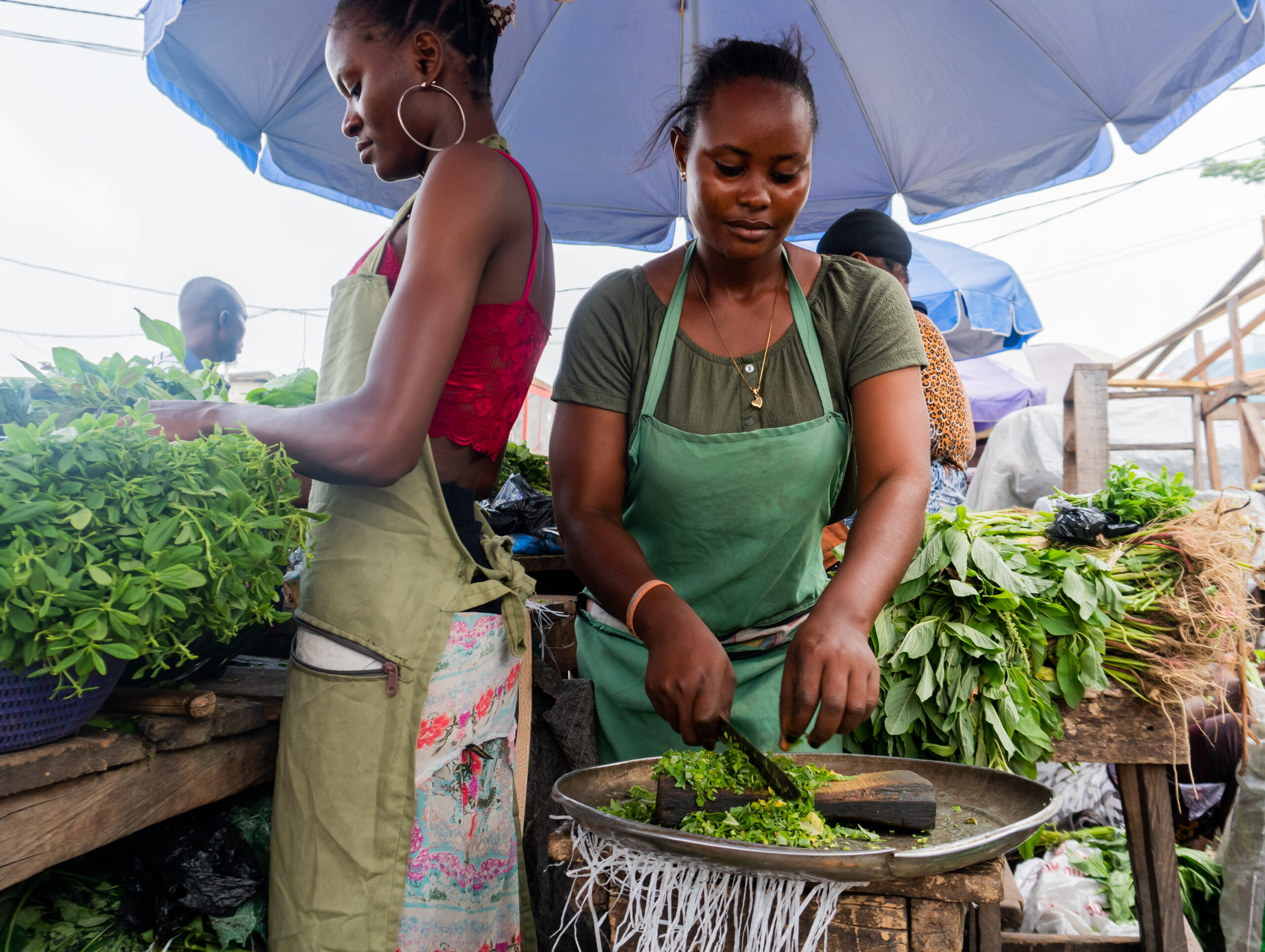
Across Nigeria, food prices are dropping more slowly. But in homes from Lagos to Kano, many families say relief still feels out of reach.
By the time inflation began to ease, Nigeria’s families had already changed the way they eat.
Meals became smaller. Meat disappeared from soups. Eggs became occasional luxuries. In many homes, breakfast quietly vanished.
Official figures now suggest the worst of the inflation surge may be over. Food inflation slowed sharply from nearly 40 per cent in late 2024 to just above 10 per cent a year later. Yet the World Bank says poverty still climbed to 63 per cent in 2025, a sign that slowing prices have not yet restored purchasing power.
Across markets in Lagos, Kano, Enugu, and Makurdi, the numbers tell one story.
Inside households, another story is unfolding.
Lagos: ‘We still buy the same rice, just less of it’
In Ajegunle, families now buy rice in paint buckets rather than full bags.
A year ago, a family could still afford enough for dinner leftovers. Now, portions are tightly managed.
“The price is no longer jumping every week like before,” a source stated, “but our income did not rise. So the food still finishes too fast.”
The family’s weekly basket has changed:
- rice quantity down by nearly a third
- beans bought less frequently
- eggs reduced from daily to twice weekly
- tomatoes replaced more often with pepper mix sachets
The inflation slowdown is visible in the market.
The recovery is not yet visible on the plate.
Kano: Farming households feel the squeeze from both sides
In a farming community outside Kano, households face a different reality.
Farmers growing maize and sorghum, while fertiliser and transport costs remain high, and insecurity has reduced access to some fields.
So while most families benefit slightly from slower food inflation as consumers, they also suffer weaker harvest income as producers.
“Food prices are not running like before,” a source claimed, “but what we earn from the farm is also not enough.”
This is the double bind the World Bank highlighted: agriculture still lags the sectors driving GDP growth, leaving rural households excluded from much of the macroeconomic rebound.
For civil servant households in Enugu, the issue is less about price acceleration than salary stagnation.
Monthly pay now disappears into transport, rent and school levies before enough food can be bought.
Protein is the clearest casualty.
Chicken has become a Sunday-only meal.
Fish portions are smaller.
Children now take bread more often than cooked meals to school.
“Prices slowed, yes. But they did not go backwards.”
That distinction captures the central misunderstanding around easing inflation:
food is still expensive, just not becoming expensive as fast.
Makurdi: The paradox of the food belt
In Makurdi, in Nigeria’s food-producing belt, households speak with frustration about paying more for staples grown nearby.
A comparative market basket from traders and household interviews shows why relief remains partial:
12-month household basket snapshot
| Item | Lagos | Kano | Enugu | Makurdi |
| Rice (5kg) | still elevated | slightly lower pace | elevated | elevated |
| Beans (paint bucket) | high | moderate-high | high | moderate |
| Tomatoes | volatile | moderate | volatile | lower seasonal |
| Eggs (crate) | expensive | expensive | expensive | slightly cheaper |
| Transport to market | very high | moderate | high | moderate |
The key trend is not whether prices are still rising quickly.
It is that most staples remain far above pre-shock household income levels.
The real affordability test
For policymakers, inflation has become the main success metric.
For households, the real measure is simpler:
- Are meals back to three times daily?
- Has protein returned?
- Can salaries cover food and transport?
- Are families rebuilding savings?
- Are children’s diets improving?
By those measures, many families remain in recovery mode.
The World Bank expects poverty to ease gradually from 2026, but warns progress will remain slow without more inclusive, job-rich growth.
For now, many Nigerians are living in the gap between statistical stabilisation and lived affordability.
Prices may no longer be spiralling.
But for millions of households, the plate still says the crisis is not over.