



Nigeria’s opposition politicians are again attempting the difficult balancing act of protecting their individual presidential ambitions while building a coalition they believe could finally unseat President Bola Ahmed Tinubu in 2027.
That contradiction was on full display in Abuja on Monday as representatives of six opposition parties gathered at the Shehu Musa Yar’Adua Centre to begin negotiations on a common political strategy — even as three of the movement’s biggest presidential figures, Atiku Abubakar, Peter Obi and Seyi Makinde, stayed away.
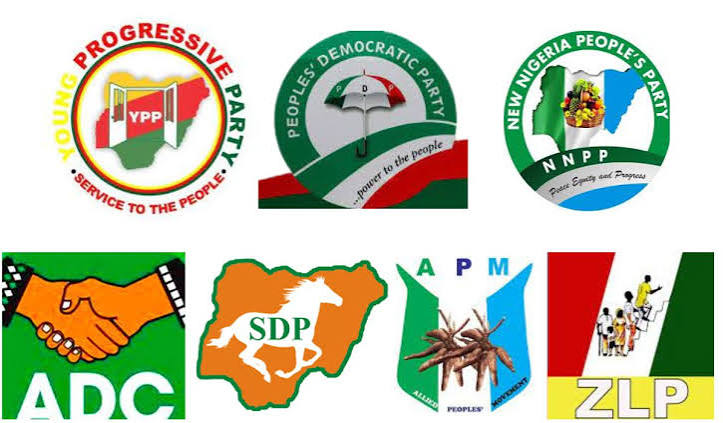
The summit, organised by the G100 and supported by the House of Representatives Minority Caucus, brought together the African Democratic Congress (ADC), Nigeria Democratic Congress (NDC), Allied Peoples Movement (APM), Peoples Democratic Party (PDP), Peoples Redemption Party (PRP) and Social Democratic Party (SDP).
While Atiku, Obi and Makinde were absent, SDP presidential candidate Adewole Adebayo, PRP candidate Donald Duke and APM vice-presidential candidate Lawal Musa Daura attended, alongside party chairmen, national officers and other senior figures.
The message from the gathering was clear: opposition unity is desirable, but the harder question of who will eventually give way to whom remains unresolved.
Four-year ‘Government of National Competence’ proposed
The G100, represented by former APC chieftain Salihu Lukman, proposed that any opposition alliance should go beyond simply producing a joint candidate.
It wants the coalition to establish a Government of National Competence based on competence, integrity, national inclusion and equitable representation, operating under a single four-year transition term.
Lukman said the arrangement should be backed by an enforceable Transition Charter rather than another political agreement that could collapse once the interests of individual politicians change.
The parties subsequently agreed to establish working groups to develop a National Covenant for Democratic Renewal, Single-Term Transition Charter, National Reform Programme, Framework for Opposition Unity and Roadmap to a Common Presidential Candidate. The groups are expected to produce their proposals within four weeks before a second summit.
The emphasis on enforceability is significant. Nigeria has witnessed several opposition alliances collapse over disagreements about leadership, party structures and the presidential ticket.
The 2023 lesson remains the biggest argument for unity
Lukman and other speakers repeatedly returned to 2023, when Atiku, Obi and Rabiu Kwankwaso ran separately and the opposition vote was split.
The argument from the coalition’s promoters is straightforward: if opposition parties again divide the anti-incumbency vote, the APC could benefit even if voters are dissatisfied with the government.
House Minority Leader Frederick Agbedi warned that the opposition risked repeating the 2023 outcome if its politicians remained fragmented.
PRP chairman Hakeem Baba-Ahmed similarly argued that none of the six parties could defeat the APC alone, while PDP representative Babangida Aliyu said personal ambition and pecuniary interests had repeatedly prevented opposition politicians from building durable alliances.
PRP presidential candidate Donald Duke offered perhaps the clearest concession, saying he was prepared to work with whichever candidate eventually emerged from a credible joint process.
“If we think we can go it all alone, then we will fail,” he said, according to reports from the summit.
But the real test is still ahead
The absence of Atiku, Obi and Makinde gives the latest initiative an immediate credibility problem.
All three are now presidential candidates on different platforms after an earlier attempt at opposition consolidation in Ibadan failed to produce a single ticket. Atiku secured the ADC ticket, Obi became the NDC candidate, while Makinde moved to the APM and emerged as its presidential candidate.
That makes the coalition’s eventual presidential-selection process the most difficult hurdle.
The G100 has deliberately avoided selecting a candidate at this stage. Instead, it is attempting to establish the rules by which the parties can negotiate the question.
That approach may be necessary because the coalition is asking politicians who have already secured party structures, delegates and presidential tickets to potentially accept an outcome they did not want.
As Lukman put it, unity will require somebody to accept “an outcome he/she did not want.”
Nigerians want unity — but trust remains the problem
The coalition effort is already generating competing reactions.
Supporters of opposition unity argue that the mathematics of 2023 should not be repeated. Critics, however, question whether politicians who failed to agree previously can suddenly subordinate their ambitions to a common candidate.
Earlier in August, veteran opposition figure Buba Galadima backed the idea of a single candidate if the choice reflected Nigerians’ wishes, but warned that the process must be based on electability and competence rather than political self-interest.
There is also scepticism over whether the latest arrangement can survive beyond Abuja meetings and communiqués. The SDP has reportedly raised concerns about implementation, pointing to the experience of the Coalition of United Political Parties (CUPP), which struggled to translate its pre-2019 cooperation into an effective electoral machine.
Across Nigeria’s online political conversation, the recurring question is therefore less “Can they defeat Tinubu?” than “Who will step down?”
That question is yet to be answered.
The ruling camp has meanwhile dismissed the opposition alliance as incapable of threatening Tinubu’s re-election prospects, describing previous opposition combinations as ineffective.
What happens next
The six parties have agreed to continue negotiations through three committees — Central Leadership, Publicity and Communication, and Legal — while five technical working groups develop the proposed unity framework.
The second summit will ultimately have to confront the issue the Abuja meeting largely deferred: how to convert six political organisations and multiple presidential ambitions into one credible electoral machine.
That is where the coalition will either become Nigeria’s most serious opposition challenge since 2015 — or another ambitious political arrangement that collapses under the weight of its own candidates.
For now, the opposition has agreed on the need to negotiate.
It has not yet agreed on who should sacrifice the presidency to make that unity possible.
Why this matters
The 2027 contest is increasingly shaping up as a battle not only between the APC and its opponents, but also over whether Nigeria’s fragmented opposition can turn dissatisfaction with the incumbent government into a single, organised electoral alternative.
The G100’s four-week timetable means the next phase of negotiations could provide an early indication of whether Atiku, Obi, Makinde and other presidential contenders are prepared to exchange individual ambitions for a common ticket.


