



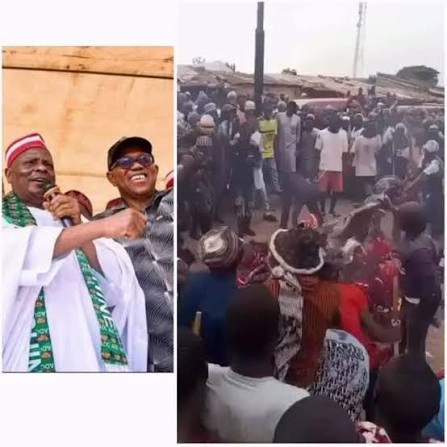
There is currently no independent evidence establishing the size of the gathering or confirming that it represents a broader movement against former Kano State governor Rabiu Musa Kwankwaso. The identities and political affiliations of the youths seen in a circulating video burning the red caps associated with the Kwankwasiyya Movement in Kura Local Government Area of Kano State have also not been independently verified. While the footage has generated political debate online, it remains unclear whether those involved were former Kwankwasiyya supporters, political opponents, or participants in an organised mobilisation.
The incident comes against the backdrop of Kwankwaso’s decision to join forces with Peter Obi ahead of the 2027 presidential election. Obi was formally adopted as the NDC’s presidential candidate in May 2026, with Kwankwaso named as his running mate. The alliance brings together Obi’s support base, particularly among younger voters and in parts of southern Nigeria, with Kwankwaso’s established political network in Kano and other northern states. The arrangement has, however, generated mixed reactions within the northern political space.
The red cap carries particular political significance in Kano, where it has become the defining symbol of Kwankwasiyya. Burning the cap can therefore be interpreted as a rejection of the movement or its leadership, and similar displays have accompanied political defections in the past. But the available evidence does not establish that the youths in Kura were established Kwankwasiyya members who have now abandoned Kwankwaso. Nor has any recognised Kura Kwankwasiyya or NNPP structure publicly confirmed that it organised or endorsed the action.
There is equally no credible evidence at present that the incident was organised by the APC or another opposition political group. No political organisation has claimed responsibility for the gathering, leaving open the possibility that it was a spontaneous protest, a mobilisation by dissatisfied supporters or a small politically motivated gathering that was subsequently amplified through social media. This uncertainty is important because isolated political videos can quickly acquire a much wider interpretation online than their original events justify.
The Kura episode is therefore best treated as a developing local political signal rather than evidence of a wider collapse of Kwankwasiyya. It may indicate that Kwankwaso’s alliance with Obi is creating resistance among some people within his traditional political environment, but the scale and significance of that resistance remain unclear. The more meaningful test will be whether recognised Kwankwasiyya leaders, ward organisers and grassroots supporters in Kura and surrounding areas subsequently announce defections or openly reject the Obi-Kwankwaso ticket. Until such evidence emerges, the footage is politically noteworthy but insufficient to establish a broader revolt against Kwankwaso in Kano.


