
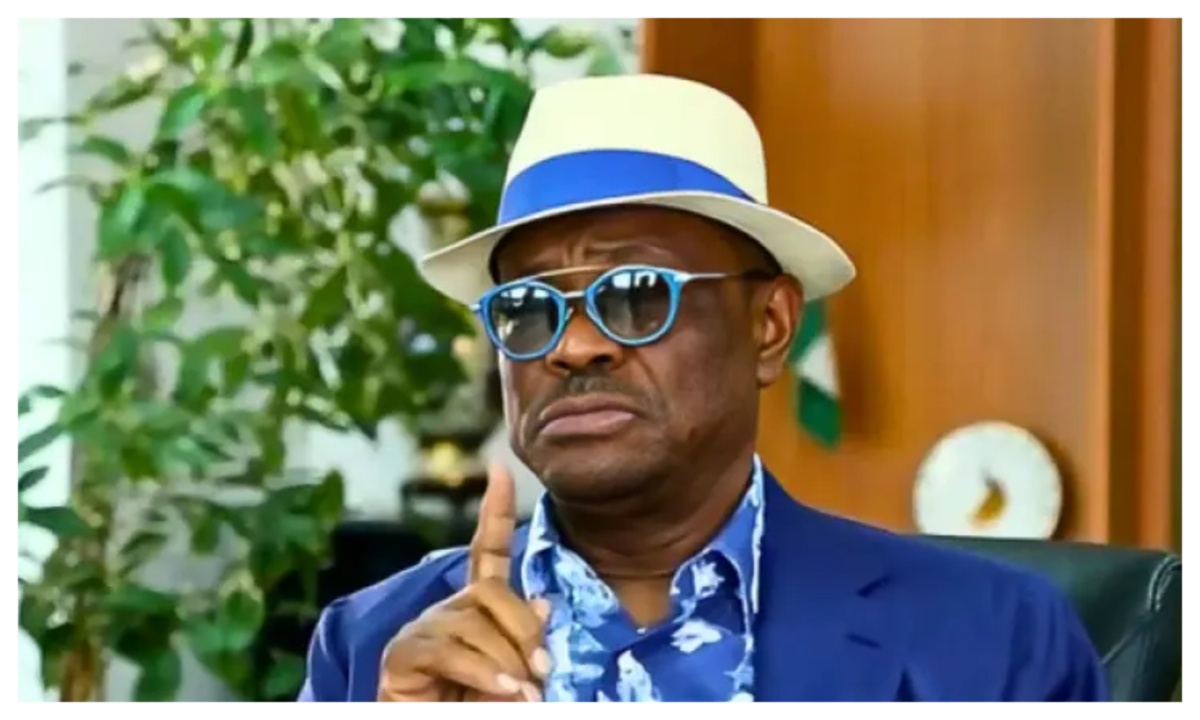
Nigeria’s Federal Capital Territory Minister, Nyesom Wike, is once again at the centre of controversy—this time over remarks suggesting he could have “shot” a television journalist.
While aides insist the comment was figurative, the backlash has reopened scrutiny of what critics describe as a pattern of combative rhetoric from one of Nigeria’s most influential political figures.
THE INCIDENT: WHAT EXACTLY HAPPENED
The controversy stems from a media parley in Abuja where Wike reacted angrily to comments made by Seun Okinbaloye during a political programme.
Okinbaloye had raised concerns about Nigeria drifting toward a one-party state. In response, Wike said:
“If there was any way to break the screen, I would have shot him.”
The statement immediately triggered outrage across media, civil society, and political circles.
Within hours, Wike’s media aide moved to contain the fallout, describing the remark as “hyperbolic” and not intended as a literal threat.
A PATTERN OF OUTBURSTS?
This is not the first time Wike’s language has drawn scrutiny.
As former governor of Rivers State and now FCT Minister, he has built a reputation for:
- Direct, often confrontational public statements
- Public dressing-down of critics and political opponents
- Highly personalised political communication style
Political analysts say this approach has helped him project strength—but also blurred the line between assertiveness and intimidation.
In previous public engagements, Wike has:
- Publicly rebuked political rivals in unusually blunt terms
- Accused institutions and individuals of bias in emotionally charged language
- Framed dissent as political hostility rather than democratic engagement
While supporters view this as “political authenticity,” critics argue it reflects a deeper intolerance for opposing views.
THE BROADER CONTEXT: SHRINKING SPACE OR POLITICAL STYLE?
The remark comes amid heightened political tension ahead of the 2027 electoral cycle, with debates around opposition viability and democratic plurality intensifying.
Okinbaloye’s original comment about a potential one-party dominance touched a sensitive nerve—one that analysts say reflects wider anxieties in Nigeria’s political space.
Opposition figures, including allies of Atiku Abubakar, have condemned Wike’s language as dangerous.
One statement described it as:
“a disgraceful and dangerous threat” and a sign of growing intolerance.
PRESS FREEDOM UNDER PRESSURE
Media rights groups and civil society organisations have gone further, warning that even rhetorical threats from powerful officials carry real consequences.
According to advocacy groups:
- “Hypothetical expressions of violent intent” can still be perceived as intimidation
- Such rhetoric contributes to a climate of fear for journalists
- It risks normalising hostility toward media professionals
International press organisations have also reportedly called for an apology, stressing that statements like this undermine democratic accountability.
WHY WORDS MATTER IN NIGERIA’S SECURITY CLIMATE
Nigeria’s history complicates the interpretation of such remarks.
From military rule to more recent crackdowns during protests, journalists have faced:
- Arrests
- Harassment
- Physical threats while covering sensitive events
Even in recent civic protests, journalists have been detained while reporting—highlighting the fragile state of press protections.
Against this backdrop, critics argue that statements referencing violence—even metaphorically—cannot be divorced from their real-world implications.
THE DEFENCE: “HYPERBOLE,” NOT THREAT
Wike’s camp insists the outrage is politically motivated.
His aide maintains:
- The comment was figurative and emotional, not literal
- The minister clarified during the programme that he did not mean actual harm
- The journalist involved has since spoken with Wike and understood the context
Supporters argue that political speech in Nigeria often uses exaggeration and should not be interpreted literally.
ANALYSIS: STRONGMAN POLITICS VS DEMOCRATIC NORMS
This incident exposes a deeper tension in Nigerian politics:
1. Personality-driven power
Wike’s style reflects a broader trend where strong personalities dominate political communication.
2. Weak institutional culture
When institutions are perceived as weak, rhetoric becomes a tool of authority.
3. Media-politician friction
As journalists become more assertive, clashes with political elites are increasing.
CONCLUSION
While no physical threat was carried out, the controversy surrounding Wike’s remarks highlights a critical issue:
In a democracy, language from those in power is never just language.
It signals boundaries, shapes public behaviour, and defines how dissent is treated.
Whether dismissed as hyperbole or condemned as intimidation, the incident raises a fundamental question:
Can Nigeria’s democracy afford rhetoric that even hints at violence against the press?
ANCHOR TAG
The Minister has not issued a formal public apology as of this report, but the debate continues—about power, responsibility, and the limits of political speech in a fragile democracy.